Showing posts with label teshuva. Show all posts

Sunday, September 28, 2014

Goyish music - what's so terrible??

I really enjoy music. I like to sing. I like to listen to acoustic, classical, rock, pop music, etc.
Music really helped me get through so many challenging, and often miserable, stages in my life...like when I was a new baalat teshuva, sitting in my room all alone with nobody who understands me and many who were judging me.
Or when I was dating. Or experiencing a heartbreak...a letdown...family issues...
music was always my comfort. It would help me calm down and help my soul elevate and heal.


I would listen to secular music but make sure that the lyrics were "kosher." And to be honest, that music helped me so many times to get through whatever it was that I was dealing with.
But after getting married, I stopped connecting with that music. I suddenly felt like it was coming from a wrong place. The romantic love songs were often so dirty or just...not about true love and felt foreign to me. I no longer sympathized with the break up songs. The rock songs suddenly became depressing and meaningless.

Now, every time I turn to music it's an Avraham Fried, Meydad Tasa, Itzik Eshel, Shwekey, etc. song and that is also the music that my children listen to. Hearing a song like "Ma Ashiv" by Mordechai ben David or "Ki Hirbeisa" by Avraham Fried or "K'ayal Taarog" by Shwekey can change around my whole day.
I have no idea how to explain it, but my mood and outlook towards music is so much more positive now. Every song I hear has positive vibes. Has productive lyrics. Has soul touching ability and elevates my emotions instead of bringing them down. Every song has a purpose, depth, and elements of holiness to it.
This is the kind of music I want resonating in my mind. In my home. In my relationships.

I recently heard a moving story:

Rabbi Wallerstein told the girls in his kiruv high school - let's do an experiment. People may think that secular dvds, music, movies, etc. doesn't negatively affect them because "I'm different."

So, he put on a popular rap song and asked everyone to close their eyes.
Then told them to write what they envision while listening to the music.
After 4 minutes of listening to this song, the papers read: hate, darkness, depression, anger, rage

Then he put on "Mama Rochel" and asked everyone to close their eyes again and listen to the music.
Then told them to write what they envision while listening to this song.
Their papers read: warmth, potential, love, HaShem, protection....

Rabbi Wallerstein's point of conducting this exercise was to show them that the music goes somewhere. It doesn't just go in one ear and out the other. It touches your soul, your mind, your thoughts, and impacts your mood.

Granted, not every secular song is a rap song or vulgar, but this story really made an impression on me.
It made me wonder - what kind of music do I want touching my soul?

So yeah. It's been 3 years since I've been exclusively listening to Jewish music, and I feel such a difference.
Thank G-d, being that I have a fulltime job as a wife & mother (and some other job for money ;)), I don't have as much time alone time as I previously did and can't listen to shiurim daily, go to Shul on Shabbatot, read as many books, etc. as I used to. I would assume that my relationship with HaShem and emuna would suffer because of that. And yet...I feel so much closer to HaShem and spiritually aware than before.
I really think it is somewhat due to surrounding myself in a home and environment that yearns for kedusha and eliminating the music I would listen to.

I'm not really sure what the purpose of this post was. Just thoughts/reminiscing/ideas and some introspection.
I hope to be able to listen to a aseret yemei teshuva related shiur this week & record it on this blog.

Wishing everyone a Shana Tova & Gmar Chatima Tova!

Thursday, September 11, 2014

Chizzuk For Elul

I'm sure y'all have heard the phrase "live every day as if it's your last."
It's one of those played out, overly quoted lines that basically means live life to the fullest.
Now while "the fullest" can be defined in many different ways, according to Judaism, it means make the most out of your potential by doing as many mitzvot as possible and being as close to HaShem as possible.
Afterall, do we really know which day is our last day? We all hope to live until 80, 90, 120...
But who really knows? I'm sure everyone, unfortunately, can think of somebody who tragically died unexpectedly at a young age, in a weird incident, etc. (lo aleinu)

So I'd like to share with you a very moving email that shook my neshama and screamed "It's Elul! Do Teshuva!" It is from halachayomit.co.il, which is a fantastic website that distributes daily Sephardic halacha to thousands of Jews around the world.

May we all be zochim to do full teshuva during this holy month of Elul and have a wonderful & productive year of 5775 (in Hebrew: Tash'aah. Tav - the last letter of the Hebrew Alphebet. And Shaa'ah means hour. So "last hour"...this year is hopefully the year of the geula. It's our last chance for teshuva, so yalla! :))


The First Lebanon War broke out in the year 5742 (1982). On Erev Rosh Hashanah of that year, Maran Rabbeinu Ovadia Yosef zt”l delivered a powerful and uplifting speech which seems ever so appropriate for us after just having experienced a difficult period of time, i.e. Operation Protective Edge in which our soldiers battled courageously against terrorist elements in the Gaza Strip who brazenly threatened the lives of millions of Israeli citizens. Unfortunately, the Jewish nation sustained priceless losses of human life. Similarly, the Jewish people, especially the residents of Southern Israel and many innocent children, were made to live in terror fearing the worst and the unexpected at any moment. It is therefore an opportune time to share the words of Maran zt”l (with some additional insights) with our readers in order to infuse them with the strength and support necessary for the upcoming year.
“Many tragedies have befallen us this past year, especially regarding the First Lebanon War, a war resulting in much bloodshed in which over six hundred IDF forces were killed, among them many G-d-fearing individuals especially the forty Hesder Yeshiva students. This is besides the multitude of injured soldiers, many of whom will remain handicapped for the rest of their lives, some without hands, feet, or eyesight. All this is in addition to the many people killed in fatal car accidents throughout the course of the year, for not a day passes without a deadly car crash.
If we stop to think about this, all of these horrific incidents were decreed to befall us on Yom Kippur. If only we would be aware of the harsh Heavenly decrees hovering above our heads, we would certainly storm the gates of Heaven in prayer in order for the King of all kings to nullify these decrees and save us from our enemies.
Would all the individuals who are no longer with us have known that this would befall them this year, we can only imagine how much they would have awakened themselves to repent fully on Yom Kippur and to shed copious tears in order to nullify this harsh decree. Certainly, not only would they have acted accordingly, for the families of these individuals would likewise not rest until they succeeded in nullifying the harsh decree against their loved ones if they would only know what lay in store for them. However, Hashem’s secrets are not revealed to us.
Fortunate is the man who takes all of this into consideration ahead of Yom Kippur, for one who repents beforehand is forgiven. One should think that he is also numbered among those for whom this year will be their last and then pray, confess, and beg Hashem to grant us all a good and sweet new year.
Picture the following: One wakes up in the morning feeling healthy, invigorated, and full of smiles. The individual says goodbye to his family (not realizing that this will be his final farewell), gets in his car, and drives off to work contently in Tel Aviv or Haifa. Sometime along his journey, at a busy intersection, a truck speeds out of control, crosses the divider into the opposite lanes, and smashes head on with this individual’s car killing him instantly. Did this person realize that this would be his end? If he would have known that this was to be his end, he certainly would not even have left the doorway of his home and he would have locked the door with seven locks. However, this human being with eyes of flesh brought himself to his own death, as the Gemara (Sukkah 53a) states that one’s own feet carry one to his place of death.
On the other hand, if one has more of an intellectual outlook, one will understand and realize that we are all in harm’s way and the world is erupting all around us. Who knows what the next day will bring? We do not only do we require Heavenly mercy from a security standpoint; one requires Heavenly mercy and assistance in every aspect of life, including meriting to bring children into the world, raising and educating them, one’s livelihood, health, peace, tranquility, and the list goes on and on. Every individual must know that everything is in Hashem’s hands and what will befall a person throughout the course of the year is being decreed during these days. Any decree has the ability to be changed from one extreme to the other during this time through repentance, prayer, and charity. After the Days of Awe, this task becomes infinitely more difficult.
Fortunate is the individual who focuses on this idea and capitalizes on these awesome days by repenting fully, for Hashem shall accept and heal him.” (See Ma’or Yisrael-Derashot, page 4)

Thursday, September 12, 2013

Ahhhhh The Gift of Teshuva...

There is a true teshuva story that I think of it relatively often, and it's one of the most beautiful, real, moving stories I've ever heard. I heard it from Rabbi Wallerstein around 5 (or more) years ago, and since then, that story has resonated in me.
I think it's really appropriate before Yom Kippur so that we all realize the power of a Jewish neshama, and the fact that it is never too late to do teshuva.
Even if a person hit "rock bottom," the only place to go is UP.
 

HaShem is the most merciful judge in the world. Even if we were repeated offenders, He gives us countless chances to try again. And again. And again. Until we get it right.
Even when a person is 90 years old and still hasn't found the sense to do teshuva, HaShem STILL gives him life so that he can do teshuva again!
Wow.
Tell me that's not awesome.
No way it can't give you chills.

Ok, now here's the story:

Rabbi Wallerstein teaches in a school where there are many traditional & not-yet-frum boys. He had a student who invited Rabbi Wallerstein, years later, to his wedding. It was a mixed wedding, but the first dance was the "Rabbis dance", so it would be separate dancing, and Rabbi Wallerstein stayed for that.
While waiting for the dance to start, Rabbi Wallerstein was sitting at the same table as the chatan's brother, Jeff. The Rabbi had not seen Jeff in years, and he saw that Jeff had his non-Jewish girlfriend sitting on his lap. He smiled at Rabbi Wallerstein, clearly conscious of this rebellious behavior.
Rabbi Wallerstein went up to Jeff and said "come, let's go dance together." Once Jeff was away from his girlfriend, Rabbi Wallerstein whispered into his right ear "you should know, I was once your Rebbe, and I'm still your Rebbe, and I love you. Nothing is going to change that...no non-Jewish girlfriend or lack of observance." Then the Rabbi whispered into Jeff's other ear: "but I want you to know, you're going to hell."
They danced together, and Jeff shared with Rabbi Wallerstein that he was now a fervent Buddhist. Rabbi Wallerstein invited Jeff to come to his shiur to speak about Buddhism, and long story short: Jeff's neshama tasted the emet of Judaism and he began his teshuva journey.
Rabbi Wallerstein helped Jeff go to yeshiva in Eretz Yisrael. After studying in yeshiva for a few years, Jeff decided it was time to enter shidduchim and find his soulmate.
He was very nervous to date because, you see, he had tattoos. And not just tattoos. But tattoos of Buddha/avoda zara. And not just a few...but many, all over his body - all the way up until his neck. So he would wear high cut shirts to hide those tattoos. But he was terrified that no frum girl would want to marry him with such tattoos. Rabbi Wallerstein gave him chizzuk to start dating and approach this subject when it was relevant.
Well, Jeff met an awesome girl with much Yirat Shamayim. After a few dates, he was sure he wanted to marry her but was nervous that after hearing about his tattoos, she wouldn't want to marry him. He shared his fears with Rabbi Wallerstein, who told Jeff "you have to tell her."

The fateful day arrived, and Jeff's heart was full of tension and panic. How would this wonderful bat yisrael, whom he wanted to spend the rest of his life with and build a beautiful Jewish home with, react to his news? Would she break up with him on the spot? Would she judge him?
During their date, Jeff was overcome with emotion and told this girl "listen, I have to tell you something."
She listened.
"I have tattoos."
She was silent. He continued.
"And not just a few tattoos...but I have them all over my body. Until my neck. And well...they're not just tattoos. They're tattoos of avoda zara. And I have a big Buddha on my body as well."

There. He revealed his secret. His skeletons. His biggest fear. Now how would she react?
The silence was deafening.
And finally, she spoke up.
"None of that matters to me," she said. "What matters is that you have the letters of HaShem's Name tattooed onto your neshama."

BH they got married. And now they're living in Israel and have a beautiful family.

Wow. What an amazing story.
First of all, the potential of this Jewish neshama. This man, who went from being a non-practicing Jew, and not just a non-practicing Jew, but a Jew dating a goy. And not just dating a goy, but also a Buddhist who was anti-Judaism became a frum man living in Eretz Yisrael.
Second of all, the power of this woman. Who was able to look past all of the external. Who was able to get over the past and look into a better future. She saw straight to this man's neshama and expressed herself to him in a manner that was loving, understanding, positive, and confidence-building.

What I took from this story was that so many times we can get caught up. Caught up in the external. Caught up in the gashmiut. Caught up in OUR past. Caught up in other people's pasts. What this person did to you, what that person did, etc.
But HaShem forgives us whenever we do teshuva. He literally waits for YEARS after we hurt Him day after day and forgives us instantly.
If HaShem can forgive any person, then we also need to. We also need to find the chessed from within and not live in the past.

Don't let your past averot stop you from the person you can become.
It reminds me of a wonderful quote I once saw that said something like "be willing to sacrifice the person you are for the person you can become."
(I might've posted the exact quote on the blog before).

Chazal teach us that Jews have NO yetzer hara on Yom Kippur, and we are compared to Melachim. That means that any averot or wrong actions that we do on Yom Kippur are only due to habit.
Habit can not allow us to withhold our potential.
Yom Kippur is the time to grab your goals and already START doing them. Want to start learning? Don't wait until after Yom Kippur. Start ON Yom Kippur.
Want to start dressing more modestly? Start ON Yom Kippur.
May we all be zochim to enact all of goals, and may we achieve true closeness to HaShem.

Remember that HaShem loves you and is rooting for you!!

Wishing everyone a Gmar Chatima v'Ktiva Tova!

Monday, September 9, 2013

Tzedaka: Give Your Heart

I recently listened to a wonderful shiur by Rabbi Paysach Krohn called "Teshuva, Tefillah, Tzedakah."

Chazal teach us that "teshuva, tefillah, and tzedaka" will save a person on Yom Hadin.
I always viewed the "tzedaka" part of it as giving charity (read: money). Rabbi Krohn emphasized the importance of doing chessed, not just giving money. Tzedaka is also giving & doing chessed. I really never thought of it that way, so it was a big chiddush for me.
Some great points from the powerful shiur:
-Tzedaka is all about stopping to think about yourself. There's nothing wrong about thinking about yourself, but we have to think about others.
-A chilling story about tremendous chessed out of love:
Rav Simcha Wasserman, the son of the big tzaddik Rav Elchanan Wasserman, was a big talmid chacham who never had children. He loved his wife dearly, and she loved him dearly. Rebbetzin Feigel Wasserman, his wife, said "I hope we both live forever, but if not, then I want to die first because I can't live one day without my Rav Simcha." Then, as she got older, she changed her mind & said "I hope that we live together forever until after Mashiach comes, but in case we don't, then I don't want to die first. Because who would sit shiva for Rav Simcha? We don't have any children. I want to be the one to sit shiva for him with proper kavod."
The amazing thing is that Rav Simcha was niftar on bet Cheshevan. She sat shiva for 7 days, and then 3 days later she passed away. She passed away exactly 10 days after her husband. HaShem allotted her that time so that she can properly give kavod to her husband, as she so much wanted to.
-Rav Shlomo Lawrence, who already had a burial plot bought in har hazeitim said that he wanted a burial plot bought near Rav Wasserman. He said "who usually comes to visit as person's kever? A person's children and descendants. Rav Simcha didn't have any children, and I do have children, so I want it to be that my children will come visit my kever and then also visit Rav Simcha, since we will be buried right next to each other." And 17 years later, after Rav Lawrence's passing, that's exactly what happened.
Rebbetzin Wasserman thought only of her husband. That is a row in the graveyard that shows us true chessed and thinking of others, even when you won't get anything "back" in this world by doing that chessed!
-A woman went to pay a shiva call to a woman she never met. Before leaving, she said "tell me something about your husband." His wife said "my husband never delayed a chessed. Any time someone asked him for a favor or if he would help someone, he would always do it right away. He wouldn't delay the chessed."
This lady left, and as she was driving, she saw a woman sleeping in her car. She figured "oh, she's probably just tired while waiting to pick up one of her children from the bus top."
She wanted to continue driving, saying it's none of her business.
But no. Her conscience told her that something didn't look right about this sleeping woman...the way her face looked... the way he head was tilted. She remembered what the lady sitting shiva told her: "my husband never delayed a chessed."
So, she called hatzalah and said "there's a lady here, and I'm just not sure if she's sleeping or if something is wrong. Can you please come and check if she's all right?"
Hatzalah came and told her "you saved this woman's life. She was in diabetic shock. If she would've remained in the car for another 20 minutes, she would've died."
The woman was stunned. She saved this woman's life.
A few months later, she received another call. The diabetic woman was pregnant. So she really saved two lives. How? All by just opening her eyes and noticing a stranger and caring enough to make a phone call for a MAYBE dangerous situation.
All of that because she didn't push off a chessed.

Similar to my other post, this teaches us not to push off any opportunities of closeness to HaShem.

It reminds me of a story. I once asked my Rav if I have to give to every person who asks for tzdaka. This would come up often at a certain place that I would go to, where there would be around 10 people who would ask for tzdaka. So I asked if I should give some of those people, all of those people, or none of those people every time that I go? I said, on one hand, I feel terrible refusing someone who is needy, but on the other hand, is there a "limit"?
My Rav said there is no chiyuv to give them, since it is uncertain what those people use the money for, and if they are actually needy, but it is nice to give to one or two occasionally.

Ok.

FFWD to when I met my (now) husband. We were dating and still getting to know each other, and we would go to this place often.
I noticed that he would give tzdaka to every single person who asks.
Now, my husband was a yeshiva bachur at the time and didn't exactly have a lot of money. I was stunned how, at this place, he gave tzdaka every single time anyone asked him (this happened over 30 times until I brought it up in conversation).
So I told him what my Rav said, and he said "I know there's no chiyuv, but every day, I pray to HaShem for opportunities to be close to him. Giving to a person, even if he's not needy, is an opportunity to get closer to HaShem."

I was blown away by his answer. I took my Rav's psak so literal. I didn't even bother to think into the benefit of doing something that isn't a chiyuv. How it would improve ME. How it would make ME more sensitive. How it would make ME a better Jew to give to a person who asks.

Chessed is not thinking just about ME. But through not thinking about myself, I'm actually helping myself! It's about opening my eyes to others. Feeling the pain of others. Worrying about others. Even if it's only a potential risk - like the lady "sleeping" in her car. Maybe she is just sleeping! But maybe she's not? And that's a big maybe. A scary maybe.

Sunday, September 8, 2013

Hold on To Your Eggs!

There was a widow who was extremely destitute. She was a mother with many children and struggled even to put a few morsels of bread on the table.
One day, she came across a fresh egg and took it home. An egg was rare in her household.
Her children were so hungry and desperately wanted to eat the egg. With much pain, the mother said "my children, I love you with all my heart, and more than anything, I want to be able to feed you. However, this egg must not be touched. You see, in this egg, is the potential for us to never worry about food. A chick will hatch from this egg. That chick will grow up to be a hen and will lay many eggs. Those eggs will become chicks, and those chicks will become chickens. Once we have a bunch of chickens, we will sell most of them for two cows. Those cows will produce milk, and we will drink the milk and also sell milk. We will eat the chickens and their eggs, which will continue to yield more chickens.
So, you see, my beloved children, we must not touch this egg! It is our only hope."
Overwhelmed with her successful plan, the widow (just for one second!) weakened her grasp on the egg, and the egg fell on the floor and cracked.
What a sad day it was in her house.

This story, as heartbreaking as it is, is a mashal that is brought down in sefarim. This widow is so many of us. We make plans for the new year. This year, I'll be x, y, and z. This year, I'll have a, b, and c. This year, I'll do 1, 2, and 3.
But... the desire is not enough. We need to have a plan.
So we make a plan.
But a plan is just that - it's a plan. "Rabot machshavot b'lev esh..."
thoughts are not enough. We must GRASP our plan by actively living it from the moment that we think of it.
If one decides to keep Shabbat, then that's it. Start THIS Shabbat! Not NEXT Shabbat.
If one decides to start learning two halachot a day, then it's not tomorrow that one should start. Start today! Pick up a sefer now, register on dailyhalacha.com or torahminute.com and start receiving the halachot now!
If one decides to start dressing modestly, then don't wait until next month to start wearing x, y, or z. Start today!

I've heard the same thing about dieting. About exercise. About smoking.
The tomorrow diet is a dream that many people live - because it's exactly that: "tomorrow". Well, tomorrow's tomorrow is also tomorrow, so that's at least one day lost. And then the next, and then the next.

Carp Diem - seize the day! Chazal teach us to do tshuva every day because we never know when our last day is.
As soon as we feel inspiration, we must grasp it and right away use it, or else we risk that it will just slip through our fingers.

This is not a dvar Torah that sits well right away because our yetzer hara wants us to be lazy. To be "chilled". To be laid back. But no. Many tzadikim have shivered at the phrase "kill time."
A Jew doesn't waste time. A Jew needs to utilize every moment to grow closer to His Creator. What can I do today to get closer to HaShem? What can I do today to improve myself?
Because we can only do mitzvoth in this world. In the next world, it's too late. There're no mitzvoth. There's only schar for what we did HERE in this world.

I know that's something that I definitely need to work on during these days of teshuva before Yom Kippur, and in general. Procrastination seems to be the yetzer hara's best friend, but how many times have I procrastinated 1 min then 5 min then 1 hour until I'm late or until I missed the opportunity to do something good?

BH may we all be zoche to make the most of our time and constantly grow closer to HaShem Yitbarach and to do our Avodat HaShem b'simcha!

Shana Tova to all :)

Tuesday, July 9, 2013

Sinat Chinam - oy oy oy oy!

Well, my dear friends in the world of blogger, I'm back! (da na na na na! Just gotta include that tune! ;) )
I know I've written that phrase so many times, but the truth is, I'm never really gone from blogger. I check updates, and I've started blog posts so many times but then just don't get around to finishing them. I miss this blog, as I have it mainly for selfish purposes (hey, just being honest here). It gives me great chizzuk, and whoever reads it is joining me along the beautiful journey of life.

Sinat Chinam. Oy! How terrible it is. Afterall, it is due to sinat chinam that we don't have a Beit Hamikdash.
But what on earth does sinat chinam mean? And what is the cause?
Chazal teach us that the first Beit Hamikdash was destroyed due to the three cardinal sins: shfichat damim, avoda zara, and gilui arayot. Those were terrible sins, but merely 70 years later, a 2nd Beit Hamikdash was built! Despite the gravity of our sins, we were able to merit the Beit Hamikdash that we so long for now.
That means that Am Yisrael repented & HaShem forgave and gave us another chance to be close to Him. But what was the reason that the 2nd Beit Hamikdash destroyed? Sinat Chinam. And we still don't have a 3rd Temple, so that means we STILL haven't done enough teshuva and still haven't gotten rid of sinat chinam.
Wow. I mean... is sinat chinam really so much worse than murder? Worse than avoda zara?! Worse than promiscuity??
It must be, since the Temple was built relatively quickly the second time, and we're still waiting for nearly 2000 years for the 3rd Temple to be rebuilt (may it be built b'mehera b'yameinu!)
So, it is obvious that sinat chinam is a really big deal.

But did you ever wonder what sinat chinam actually is? I remember always thinking it's hating someone without a reason, but honestly, out all everyone you know - how many people just hate someone without a reason?
I don't know many.
I do know many people who hate someone because that person hurt them in some way.
So what's the deal with sinat chinam?
The quick answer is that when we don't have hakarat hatov, we have jealousy, and jealousy leads to sinat chinam.
Ready to delve into our amazing Holy Torah?

So, let's go to the very beginning...
Adam was formed from dirt. Why dirt? Because dirt has the most potential for growth, for life, for sustenance. Afterall, everything we eat grows from dirt. Vegetation is needed for all animals to surirve. Dirt is needed for trees to grow; trees that give us oxygen, paper, wood, and countless of other benefits.
But dirt is also something very low, and well, dirty (hey, the word is called DIRTy for a reason!) That is to remind us that we are "afar" - dust. We will become dust after we die...our bodies will be nothing. That should greatly humble human beings and realize that THIS WORLD is the only place where we can use our potential, since, afterall we are made of dirt. But at the same time, we should keep in mind, that our potential is not timeless, and we will soon (hopefully after 120 BH) become dust. Then our potential will be over, and the only thing we will have left in olam haba is our mitzvot that we fulfilled in this world.
Okay, so something interesting about dust.
Think of something beautiful, like gold, silver, or black marble tiles. If they are covered in dust, they aren't so beautiful anymore. The dust conceals their beauty.
That's what happens to a person when he is jealous. His jealousy will cover up anything good that he has in his life. Jealousy blinds a person. It spreads through a person's mind like an illness and slowly but surely will completely destroy the jealous person.

What does jealousy have to do with anything?
Because jealousy is ALWAYS the cause of sinat chinam.

(she doesn't look like a happy camper, does she?")
Rabbi Wallerstein once gave a shiur, and a man came up to him and said "please help me. I am  jealous of so many of my friends...their businesses/parnassa, their clothes, their wives... how can I stop?"
Rabbi Wallerstein told him that his jealousy is merely a symptom of his real problem. The true basis to this man's problem is that he need a sense of self. if you're happy with yourself, then you wont care what anyone else has!
Chazal teach us "ezehu ashir? Hasameach bchelko." - "who is rich? The one who is happy with his lot."
This is just so, so, SO true. Wow. The wisdom of Chazal. How much this applies today, perhaps more than ever!
Because there will ALWAYS be someone richer. There will ALWAYS be someone more beautiful. There will ALWAYS be someone who has a "better" spouse. There will ALWAYS be someone who has more well behaved children. There will ALWAYS be someone who seems to have it better than you do.
But your reality is what you make of it. If you live your life appreciating everything you have and looking at everything in your life without comparisons, then you will slowly start to love your own life and not have any desire to live someone else's life.

There's a Mishna that says "kina motzia et haadam m'haolam" - translated as "jealousy takes out a person from this world." What does that mean? We're still alive even if we're jealous! We're still breathing, still walking, still functioning, aren't we?
This Mishna is teaching us that the person who is jealous doesn't have a sense of self. If I don't have a sense of sense, then there is no me! I'm wrongly trying to live the other person's life if I'm jealous. My thoughts will eat me up and absolutely take away any gratitude for what G-d gave ME. So therefore, I dont have me - it's like im not in this world.

We're all individuals. Every single person in the world is special and unique - there was never anyone exactly like you in the world, and there never will be! (Yes, including you! The person reading this!)
Every person has a finger print that no one else has. So just like you don't have the same finger print as anyone else, you also shouldn't have anything else to do with anyone's bank account, looks, marriage, etc.
Every individual should focus on your himself by working on making HIMSELF happy. He shouldn't work on himself by trying to compete with other people! In fact, theres no such thing as positive competition in the Torah. Whenever people try to compete, we see disasterous results, such as w/ kayin and hevel or with korach v'adato!

There's an interesting and amusing mazal that kina (jealousy) and sina (hatred) went for a walk. They met a king, and he said to kina, I'll give you anything - whatever you ask for, and I'll give sina twice the amount of whatever you ask for. kina got annoyed and exclaimed "I don't want sina to have more than me!" So, kina thought about it & came to a decision. He requested that the king to punch out his eye, so sina would then lose both eyes.
How crazy is that?!
Anyone who reads that thinks how foolish kina was. He could've gained something, but instead he lost something just so that his enemy could suffer.
That's how terrible jealousy is. Who suffers the MOST from being jealous? The person who is jealous! He is willing to harm himself just so that the other person can lose something, so that the jealous person will feel like he has more.

So, my friends, we see here how terrible jealousy is. How much it can ruin people's lives. No wonder it's part of the 10 Commandments that it's assur for us to be jealous!
And just as much as jealousy ruins a person's life, sina can also eat a person alive - literally. To the point of murder and self-destruction.
The only way to overcome jealousy, even a speck of it, is to completely zoom out of other people's lives and to focus on the GOOD in our lives.
Once we appreciate and love OURSELVES, we can do ahavat chinam with our fellow Jews. Why love ourselves first? Because a person can only give over what he has.
If I don't love myself, how can I love someone else?

An explanation of ahavat chinam, including tips, will be'ezrat HaShem be posted in the near future.

May we all merit to work on our middot and see all of the good HaShem bestows upon us, and may we me merit to see the Beit HaMikdash rebuilt in our times b'mehera b'yameinu, amen.

***I credit most of the divrei Torah here to an excellent shiur given by Rabbi Wallerstein.

Thursday, October 11, 2012

Take a second look

I looked in the mirror.

Here I am.

A young married woman. Wearing a headscarf. Wearing a long sleeved shirt, long skirt, and socks, in the hot summer-like weather.

What do I do? I learn. I daven. I work. I do laundry. I cook. I clean.

I pictured myself...for just a split second...
not on this path. Scary thought.

Who would I be? How would I act? What would I look like?

What are most 20-something year old not-yet-religious or not Jewish gals, my age, doing at this point in life?
Learning: college. Masters. PHD. Pursuing a career.
Partying at night and wearing the latest fashions.
Food is take out or instant soup or cereal.
Laundry? HA! I have no clue how to do laundry. It gets sent out once a month or her mom just does it.
Marriage isn’t really on their mind. Having kids and raising a family definitely isn’t on the list until age 30. At least!
I know. Some of you are thinking about the exceptions to the rule – hey how about this girl I know? She’s not frum, but she’s 25 and wants to get married now.
Sorry. She’s the exception. It’s simply not the norm.
Who’s the typical young woman in secular society? Beautiful, fit, fashionable, goes to the gym, educated with at least two degrees, parties but doesn’t bring her party girl spirit to the work place, open to all experiences, all viewpoints, all people, has a liberal attitude towards life, tech-savvy, sends 200 text messages a day, and of course, has an up-to-date facebook account.

As I gazed more intently into the mirror – I found myself being so grateful to HaShem. Thank YOU HaShem for saving me…I could’ve been so lost. I grew up in that world, in that type of school, social setting, family, etc. where I could be the same age right now, but on a completely different and wrong direction in life. I could be dressing immodestly, posting my pictures on facebook – just to show everyone that I was “out”, having 1000 male friends and very few, if any, real female friends, and being completely lost and trying to fill that emptiness by partying, clubbing, drinking, doing drugs, watching movies, being tech-obsessed,  reading all of the latest magazines and spending a fortune on all of the latest trends, etc.
But no. That’s not my life.  Thank G-d.

All these thoughts passed through my head within seconds.

Later, I shared these thoughts with my husband and said “living that life is simply a completely different reality.”

I said that knowing that's probably what many women would think about me, as well. The "religious reality" vs. actual reality.

But who really has the REAL reality?

He then shared something that made a strong impression on me:
“Sefardi Gal, HaShem gives every individual in this world a certain amount of energy and time. Everyone is going to get tired somehow. At the end of the day, everyone has 24 hours a day. We choose how to spend it.”
That means…
Everyone has to go to work. Everyone has to get dressed. Everyone has to eat, speak, function, etc.
But HOW each individual does these seemingly mundane acts makes the difference between holiness and haughtiness. Clarity and confusion. Fulfilment and emptiness.
So, yes, everyone needs clothing. I need clothes. But what kind of clothes do I wear? Are they modest? Do I wear them just because everyone else does, or because this is truly the way I believe and know that a person is supposed to dress.
Yes, I need to speak and communicate. But what kind of words do I use? Do I speak with a harsh tone, do I go around gossiping, speaking lashon hara, cursing, insulting others, etc.? Or do I speak pleasantly, kindly, honestly, positively?

I’m not sure if I’m conveying the point well enough. It hit me like a ton of bricks.

We are allotted so many gifts in this world. We choose whether to properly use them, abuse them, or not use them at all.
A Jew should always strive to use his gifts as much as possible. To use every emotion, every body part, every status, every part of himself to serve HaShem in the best way possible. To elevate everything and everyone around him. To make mundane acts become wondrous, holy acts that lead him to be closer to HaShem yitbarach.

May we take this outlook and apply it during this incredible new year of 5773. A belated Shana Tova to all!

I will try to update this blog more often, but I must say bli neder because…well…
I’ll be busy doing laundry and cooking aka striving to upgrade the mundane to holiness :D
Shabbat Shalom!

Friday, June 29, 2012

Holy Cow!!!

These awesome words of Torah are mostly from Rabbi Wagensberg.

The seemingly paradoxical nature of the mitzvah of Parah Adumah (red heifer) makes it particularly troublesome. The ashes of the parah adumah were used to purify people who became tameh by coming into contact with a dead body, yet the Cohanim, who prepared the purifying ashes became impure in the process!

What many people don't know, though, is that the Cohen became impure for only ONE day while, with the ashes of the parah adumah, he could made MILLIONs of tameh people to be pure FOREVER.

Whoawhoawhoawhoawhoa.

What a lesson.

Temporary impurity can lead to millions of people becoming pure and staying pure FOREVER.

We must realize that our power to fix things is exponentially greater than our ability to destroy them. One tiny spark of light can dispel vast amounts of darkness because the powers of positive energy in this world are far more potent than the powers of negative energy!

It's never easy to be the first one to do the right move. And sometimes (more often than not - due to our friend and foe, the yetzer hara) the right move even feels like the WRONG move. But when you finally do that right move - it can influence the WHOLE world. Thousands are you. That one moment or that relatively temporary discomfort for you can lead to so, so, so many people growing because of it.

For example, it's never easy to be the first one in a less religious group to become MORE religious or observant. Say, for a example, a bunch of girls who don't dress modestly, or even those who dress somewhat modestly and then suddenly, one decides that she wants to become MORE modest. She decides: you know what? I'm going to wear longer skirts. I'm going to wear looser shirts. I'm going to wear stockings. I'm going to wear darker stockings since clear, nude colored stockings aren't modest according to most opinions that require women to cover their calves. I'm going to wear a mitpachat even though most people wear wigs.

Do her friends, her family, envrionment, etc. ALLOW her to make this decision easily?? Does she feel good RIGHT after she makes the change? Most likely NOT! Yetzer hara will make her feel guilt. Impurity. Difficulty.

Or take a guy, who decides - I'm not going to clubs anymore. I'm not going to hang out with those guys anymore. I'm not going to sleep late anymore and miss minyan. I'm not going to go to movies anymore. (The list is endless!)

Will his friends ALLOW him to make this decision easily? Does he feel good RIGHT after he makes the change? Surprise surprise most likely NOT!!! Yetzer hara will do everything in his power to make him feel impure, guilty, and not worthy.

But every single person who is doing the right thing.... NO EXCEPTIONS... will find that if he or she perserves and continue doing that mitzvah then NOT ONLY will everyone around him or her ACCEPT him but they will ALSO emulate him! Just by that one choice to improve, then in a lifetime, you can influence thousands, even millions, without even realizing!

Never give in just because it's difficult. You will receive tremendous benefit. Spiritual AND physical both in this world and in the next world. It just USUALLY WON'T BE IMMEDIATE!

Amazing, right?! The Cohen becomes "impure" by doing the right thing but helps thousands in the process. And then, of course, he becomes even more pure the next day. Why? Because he did the right thing. Yes, it wasn't easy to become impure. But it was worth it in the long run. He helped himself, by doing Avodat HaShem, as well as helping Klal Yisrael.

To finish off, I'll share a personal story with you. As I've mentioned before, I don't wear any wigs, baruch HaShem. Even though I was sure, for many years, that I wouldn't wear a wig, AND I knew exactly WHY I'm NOT wearing a wig, and I strongly believe in it, I still struggled with it. Afterall, I was used to donning my hair for 20+ years. I was used to that look, that confidence, etc. Baruch HaShem, it got easier and easier with every day.
When I started working, I was unsure how my haircoverings would be received. To be completely honest, I didn't really care or think about Granted, I worked in a Jewish environment, but
a) not everyone there covered their hair
b) almost everyone there who DID cover their hair wore wigs. And these were not women who were wearing plain wigs. They were wearing fancy, lavish, long, & styled wigs.

within a week, I was SHOCKED. At least 5 women came up to me - JUST in the first week - to ask me either...
a) how I have the koach to cover my hair so properly and beautifully
b) where I buy my scarves
c) where THEY can buy the same scarves
d) how THEY can cover their hair like mine

I was truly taken by surprise. I'm only here for one week and this is the impression I've made?

So without ANY gaavah I'm telling you - YES! Whenever a Jew is doing the RIGHT thing and KEEPING the Torah, then (s)he influences those around him or her. No doubt about it.
Yes, more often than not, it's not easy doing the right thing. Torah is not easy.
But who said it's meant to be easy? Who said anything worthwhile in this life is easy?

Anyone remember my favorite quote??
"The purpose of life is not to be comfortable. The Almighty did not put us in this world so that we can cruise through with all the comforts of life, no pain, no challenges, and then to die peacefully under a beach umbrella with a pina colada in hand. The Almighty placed us in this world to face challenges, to perfect our character and to grow spiritually. That is why life is filled with challenges. It is our choice whether to view our challenges as obstacles or stepping stones."
-Rabbi Kalman Packouz

May HaShem help us all to be on the right path and stay strong and influence others
in the process!

Now I'm off to make a banana chocolate chip cake. Hopefully it will inspire the humans around it to eat it. :D

Shabbat Shalom u'Mevorach! :)

Thursday, June 28, 2012

The Roads We Pave

Ever wonder why we have lines on the palm of our hands? How come animals don't have lines on their paws?

Whatever is in the physical world mirrors what's in the spiritual world. It's to teach us that our neshama also has "lines" on it.

What're these neshama lines?

These neshama lines are our all of our mitzvot (good deeds) and averot (sins). Each time someone does a mitzvah, (s)he creates a positive line on his/her neshama.
That line is called a neshama ROAD.


For example, a person who lit Shabbat candles even once, opened up a road of the mitzvah of Shabbat candles.
A person who, c"vs, does an avera, even ONCE - opens up a road of that particular avera.

Once the road is open, it's extremely difficult to erase it. You can close it by never going through that road again, but that still won't ERASE the road. Only TRUE remorse and repentenance out of love will ERASE that road forever.

That's why - when people say "what's the big deal? I'm just smoking weed ONCE." "What's the big deal? I'm just going to wear this short skirt ONCE." "What's the big deal? I'm just going to miss praying mincha this ONCE." -- not only did that person MISS the opportunity to do a mitzvah AND did an avera, but also this person opened a ROAD of that particular avera. Don't even THINK about doing the avera even once. Because your first time can become a lifetime.

Rabbi Wallerstein explains that that is the reason so many people who were once an alcoholic - are ALWAYS alcoholics and end up going back to AA so many times. They have all of these roads of alcohol and excessive drinking opened in the neshama. Only the few who work very hard at overcoming their passion and lust for drinking and truly truly regret what they did and REPENT are the ones who never go back. The second they take EVEN one drink again - that's it. They're back to be alcoholics.


Once you have so many roads open, it's very easy to get lost on your destination of life. Your destination to Olam Haba. The real world. Afterall, as Pirkei Avot and Mesillat Yesharim so beautifully informs us - this world is just a "posdor" - an enterance to the main ballroom which is Olam Haba.

Oyyyyyy how many roads of averot we all must have.

The good news is: we also have roads of mitzvot. And if we truly regret the roads of averot that we created, then we can completely erase those roads and ONLY have roads of mitzvot.

The Jewish Nation needs to WAKE UP!!!! We live in a world of ACTIONS and CONSEQUENCES. We need to take responsibility for our actions and KNOW the consequences. We are creating so many roads... so so so so many. Countless every day. There is NOWHERE that the body goes WITHOUT the neshama until our last day in this world. Our neshama experiences EVERYTHING that the body does - be it the good or the bad.

HaShem wants every single Jew act holy, because every Jew IS holy, and HaShem wants us all to be close to Him. Our Yetzer Hatov is begging us - keep your neshama ALIVE, and our Yetzer Hara is begging us, BURNING us, please destroy your neshama. Make it as dirty as possible. Open as many terrible, bumpy, dangerous roads as possible.

It's a war.

Expect, unlike a physical war between two nations -- this war requires only our decision. Do I want to be good or bad? Do I think that I'm a neshama or a body? Am I an animal or spiritual being?

The choice is OURS.

Will we let our neshama create positive, sturdy, clean paved roads of mitzvot, or will we let our neshama create negative, dark, dirty, bumpy roads of averot?

It's up to us.
May HaShem give us all Siyata D'Shamaya to successfully fight this battle and only create roads that will take us in a positive direction & closer to the Shechina!

Sunday, September 25, 2011

We Are Wet Clay!! Yay!

A Dvar Torah from ATorahMinute that I read & really liked. Enjoy!

G-d commanded the prophet Yirmiyahu (Yirmiyahu 18:1-4) to go to a potter's house, where he observed the potter working with wet clay. Yirmiyahu reported that when the potter did not like the vessel which he created, for whatever reason, he was able to form another one from that same vessel -- one which pleased him.

The Ben Ish Chai z"l explains that there is a difference between a vessel made of clay, which was burnt in the kiln and one which was not burnt. While the first one, once broken cannot be repaired or fixed, the second one can be reconstructed to perfection even if it were broken into many pieces. A person who sins, is likened to the second one - the wet clay which can be reformed. Even if he performs the worst possible transgressions, once he regrets whole heartedly and repents, he will shine like dawn and blossom like a rose. Our merciful Father in Heaven, unlike a king made of flesh and blood, desires our Teshuva (repentance) and pleads with us to change, in spite of our sins and transgressions.


Teshuva is like a wide ocean, open to anyone at any given time. Chazal teach us that the gates of teshuva are forever open. However, during the time between the first of Elul and Yom Kippur G-d is even closer to us. We should not miss out on this special time and extraordinary gift that G-d has granted us. We must take advantage of it and draw ourselves closer to Him.

Let us set aside a few moments for self examination and introspection. What area would you choose to work on and improve? Perhaps smile more often or call a friend whose feelings you might have hurt. Make an effort to greet Shabbath in a timely fashion or learn to forgive and forget. The list is endless, the opportunity is waiting for us.

We have the power, just like the potter, to recreate a most exquisite piece of pottery. This piece of pottery is our own selves. We should refashion it till we have transformed it into an outstanding Jewish people!


I wish all of readers and Klal Yisrael a healthy, happy, and safe new year (5772). May we all be written in the book of life, and may we all grow closer to HaShem Yitbarach with each and every day of our lives. May we receive redemption on both personal and national levels. For all those who need a refua shlemah - may you be fully healthy this year! For all who need parnassah - may you have the amount of money that you need and are able to use for positive beneficial purposes! For all who need children - may you have healthy, holy, happy children who will always be in on the right derech. For all the singles who want to find their zivugim - may you date, get engaged, and get married to your best possible zivug. May we all be zoche to see Mashiach and Yerushalayim rebuilt in our times speedily in a peaceful way! Shana tova u'metukah! :)

Wednesday, April 6, 2011

An Unexpected Teacher

I was on the subway & feeling drained. 'Twas a long day. Sometimes an individual can forget why (s)he is here. That the whole purpose of our existence is to do good. To fulfill Torah and mitzvot.
I'm embarrassed to admit that at that moment, I wasn't focusing on my mission. I was just tired. I was fed up.

An African American man arrived on my subway car and was about to make a speech.
Oh great. Another speech about jesus or money. I silently dreaded.

But to my pleasant surprise, this speech was different. And was a huge wake up call for me.
I don't remember the beginning of the speech, but the middle to end went something like the following:

"I'd like to tell y'all that I wasn't always a good guy. I used to do bad things. But then I realized that I can change. I want y'all to know that - you can always change! You can be in the dark, but you're not trapped. Just step into the light. Just like that.
G-d is waiting for you. He will accept you regardless of where you've been.
And I want y'all to know...that G-d is great not SOME of the time, but ALL of the time. He is great."

I felt like he was sent to speak directly to me. Kinda selfish, I know. But hey - each person should feel like the world was created for himself/herself, right?
What was the message I got? Do teshuva. Know that everything is l'tova. Gam zu l'tova - BECAUSE G-d is always great and right. Not only sometimes. But at all times.

Chodesh tov. May this chodesh Nissan be full of personal redemptions for each one of you and all of Klal Yisrael.

Monday, March 21, 2011

Coming Home From Ramallah

The following story gave me the chills. (By the way, I don't often get 'the chills')

The power of the neshama is AMAZING!

(This is an aish article)

After the concluding prayer, Dan quickly walked to the front of the shul in Jerusalem, said "Good Shabbos" to the rabbi and a few other people he knew, and at once made his way toward the back. Time to get home and make Kiddush for the family.

On his way out, a sudden impulse struck him and he turned around to watch the people filing out. His eyes slowly scanned the shul. Was there anyone who needed a place to eat? "Who's that sitting toward the side wall? I know almost everyone here, and I don't believe he's been here before."

Dan approached the young man, scanning him with an experienced eye. Dungarees, backpack, dark skin, curly black hair -- looks Sephardi, maybe Moroccan.

A moment more for consideration, and he was moving toward the boy with his hand extended in welcome. "Good Shabbos. My name is Dan Eisenblatt. Would you like to eat at my house tonight?"

The young man's face broke in an instant from a worried look to a toothy smile. "Yeah, thanks. My name is Machi." The young man picked up his backpack, and together they walked out of the shul.

MY FAVORITE SONG
A few minutes later they were all standing around Dan's Shabbos table. As soon as the family started singing Shalom Aleichem, Dan noticed that his guest wasn't singing along. "Maybe he's shy, or can't sing," he surmised. The guest gave another one of his toothy smiles and followed along, limping badly but obviously trying his best.

Even after the meal began and the guest had relaxed somewhat, he still seemed a bit fidgety and was mostly silent. Dan picked up the signal and kept the conversation general, and centered his remarks on the weekly Torah portion, mixed with small talk about current events.

Is there a song you want to sing? I can help if you're not sure about the tune.After the fish, Dan noticed his guest leafing through his songbook, apparently looking for something. He asked with a smile, "Is there a song you want to sing? I can help if you're not sure about the tune."

The guest's face lit up, a startling change. "There is a song I'd like to sing, but I can't find it here. I really liked what we sang in the synagogue tonight. What was it called? Something ‘dodi.'"

Dan paused for a moment, on the verge of saying, "It's not usually sung at the table," but then he caught himself. "If that's what the kid wants," he thought, "what's the harm?" Aloud he said, "You mean Lecha Dodi. Wait, let me get you a siddur."

Once they had sung Lecha Dodi, the young man resumed his silence until after the soup, when Dan asked him, "Which song now?"

The guest looked embarrassed, but after a bit of encouragement said firmly, "I'd really like to sing Lecha Dodi again."

Dan was not really all that surprised when, after the chicken, he asked his guest what song now, and the young man said, "Lecha Dodi, please." Dan almost blurted out, "Let's sing it a little softer this time, the neighbors are going to think I'm nuts," but thought better of it.

Finally it got to be too much for Dan. "Don't you want to sing something else?" he suggested gently.

His guest blushed and looked down. "I just really like that one," he mumbled. "Just something about it -- I really like it." In all, they must have sung "The Song" eight or nine times. Dan wasn't sure -- he lost count.

MACHMUD IBN-ESH-SHARIF
Later, when they had a quiet time to talk, Dan said, "I was just wondering, we haven't had more than a few moments to chat. Where are you from?"

The boy looked pained, then stared down at the floor and said softly, "Ramallah."

Dan's heart skipped a beat. He was sure he'd heard the boy say "Ramallah," a large Arab city on the West Bank. Quickly he caught himself, and then realized that he must have said Ramleh, an Israeli city. Dan said, "Oh, I have a cousin there. Do you know Ephraim Warner? He lives on Herzl Street."

The young man shook his head sadly. "There are no Jews in Ramallah."The young man shook his head sadly. "There are no Jews in Ramallah."

Dan gasped. He really had said "Ramallah"! His thoughts were racing. Did he just spend Shabbos with an Arab? Wait a minute! Take a deep breath and let's get this straightened out. Giving his head a quick shake he told the boy, "I'm sorry, I'm a bit confused. And now that I think of it, I haven't even asked your full name. What is it, please?"

The boy looked terrified for a moment, then squared his shoulders and said quietly, "Machmud Ibn-esh-Sharif."

Machmud was looking even more terrified now; obviously he could tell what Dan was thinking. Hurriedly he said, "Wait! I'm Jewish. I'm just trying to find out where I belong."

Dan stood there speechless. What could he say?

Machmud broke the silence hesitantly: "I was born and grew up in Ramallah. I was taught to hate my Jewish oppressors, and to think that killing them was heroism. But I always had my doubts. I mean, we were taught that the Sunna, the tradition, says, 'No one of you is a believer until he desires for his brother that which he desires for himself.' I used to sit and wonder, Weren't the Yahud (Jews) people, too? Didn't they have the right to live the same as us? If we're supposed to be good to everyone, how come nobody includes Jews in that?

"I asked these questions to my father, and he threw me out of the house. Just like that, with nothing but the clothes on my back. By now my mind was made up: I was going to run away and live with the Yahud, until I could find out what they were really like."

FAMILY PHOTO
Machmud continued:

"I snuck back into the house that night, to get my things and my backpack. My mother caught me in the middle of packing. She looked pale and upset, but she was quiet and gentle to me, and after a while she got me to talk. I told her that I wanted to go live with the Jews for a while and find out what they're really like, and maybe I would even want to convert.

"She was turning more and more pale while I said all this, and I thought she was angry, but that wasn't it. Something else was hurting her, and she whispered, 'You don't have to convert. You already are a Jew.'

She whispered: "You don't have to convert. You already are a Jew." "I was shocked. My head started spinning, and for a moment I couldn't speak. Then I stammered, 'What do you mean?'

"'In Judaism,' she told me, 'the religion goes according to the mother. I'm Jewish, so that means you're Jewish.'

"I never had any idea my mother was Jewish. I guess she didn't want anyone to know. She sure didn't feel too good about her life, because she whispered suddenly, 'I made a mistake by marrying an Arab man. In you, my mistake will be redeemed.'

"My mother always talked that way, poetic-like. She went and dug out some old documents, and handed them to me: things like my birth certificate and her old Israeli ID card, so I could prove I was a Jew. I've got them here, but I don't know what to do with them.

"My mother hesitated about one piece of paper. Then she said, 'You may as well take this. It is an old photograph of my grandparents, which was taken when they went looking for the grave of some great ancestor of ours. They went up north and found the grave, and that's when this picture was taken.'"

Dan gently put his hand on Machmud's shoulder. Machmud looked up, scared and hopeful at the same time. Dan asked, "Do you have the photo here?"

The boy's face lit up. ""Sure! I always carry it with me." He reached in his backpack and pulled out an old, tattered envelope.

This grave was in the old cemetery in Tzfat, and the inscription identified it as the author of Lecha Dodi. Dan gingerly took the photo from the envelope, picked up his glasses, and looked carefully at it. The first thing that stood out was the family group: an old-time Sephardi family from the turn of the century.

Then he focused on the grave they were standing around. When he read the gravestone inscription, he nearly dropped the photo. He rubbed his eyes to make sure. There was no doubt. This was a grave in the old cemetery in Tzfat, and the inscription identified it as the grave of the great Kabbalist and tzaddik Rabbi Shlomo Alkabetz -- the author of "Lecha Dodi."

Dan's voice quivered with excitement as he explained to Machmud who his ancestor was. "He was a friend of the Arizal, a great Torah scholar, a tzaddik, a mystic. And Machmud, your ancestor wrote that song we were singing all Shabbos: Lecha Dodi!"

This time it was Machmud's turn to be struck speechless. Dan slowly stood up from the bed, still in awe about what had happened. He extended his trembling hand and said, "Welcome home, Machmud. Now how about picking a new name for yourself."

Postscript: Machmud changed his name and enrolled in yeshiva in Jerusalem, where he studied diligently to "catch up" on his Jewish education. He got married to a nice Jewish girl, and gained popularity as a lecturer, recounting his dramatic story. He eventually had to flee Israel, due to threats against his life by members of his Arab family.

Reprinted with permission from "Monsey, Kiryat Sefer, and Beyond," (http://www.targum.com/store/Roth.html) by Zev Roth (Targum Press, 2002). The story is true; the names have been changed.

Tuesday, March 8, 2011

Quote Of The Day :)

"The important thing is... to be ready at any
moment, to sacrifice the person you are for the person who you could become."
-- Charles DuBois

Friday, January 21, 2011

Ezehu Gibor?

"Greatness lies in how we resolve conflicts - in using our free will to grow - not to quit. To face reality - not to escape. To live and not to die. When we escape problems, we escape the chance of becoming great. It's a constant battle every moment of our lives."
-Rav Noach Weinberg z"tl

Shabbat shalom!

Saturday, December 25, 2010

Rimonim Are Super Cool

So, I was chopping up some veggies for a salad l'kavod Shabbat, while my eyes were dialated (gotta love check ups at the eye doctor.) Still had 3850238230482030202 things do before Shabbat. I had just cleaned the table and kitchen countertop, and everything was sparkly clean. Mission accomplished.
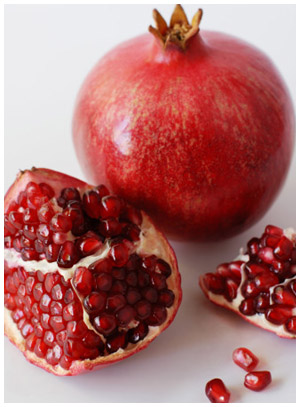
On my way to clean my room, I noticed two special friends chilling on the living room table. Pomegrantes!!!
I got so happy. I mean, come on, when do you get to see pomegrantes other than Rosh Hashana time???
Why not open one up l'kavod Shabbat? Nutty person that I am, that's precisely what I did; I opened one up...forgetting how messy pomegrantes can be.
Now, anybody who has the fun task of opening up pomegrantes for Rosh Hashana knows that:
1) the fruit's juice can get messy and leak all over the place, regardless of how careful you are
2) it can leave a temporary or permanent stain on anything and everything; your clothing, your hands, the table, etc, and for the most part, if it stains your clothes -- the stain lasts forever and ever...and ever.
3) A pomegrante contains many red pieces/seeds of fruits, and also white pieces/skin that often get mixed up with the seeds, and if you eat the red part of the fruit along with the white skin thingy, there's an extremely bitter taste -- unless you remove the white particles before consuming any.


So, I was humming the tune to one of my favorite songs while opening the pomegrante, thinking about how the pomegrante symbolizes the 613 mitzvot.

Now, there's something to learn from everything in this world. Every person, every creature, every object, etc. Some thoughts came to mind. Not sure if these ideas are chiddushim or if these are concepts that many have thought of before.

1) If a pomegrante stains your shirt, the stain basically lasts forever. Since a pomegrante symbolizes mitzvot, a mitzvah -- too -- is eternal. Even if somebody isn't the most observant or holiest person around, (s)he should never think "oh, what good will 1 mitzvah do if I negelect the other 612?" Because each mitzvah can make a long lasting impression!
I heard the following incredible thought from a project inspire Rabbi: if thousands of diamonds fell to the ground in your neighborhood, and everybody rushed to collect them, would you refrain from attempting to collect any just because you can't obtain them all? Absolutely not! Even 1 would make a difference. It's the same with mitzvot. Each mitzvah, no matter how "small" or "big", is counted and precious.

2) Now, in certain cases, the pomegrante juice appears to leave a stain -- but the stain is removable. For example, if the pomegrante juice leaks onto your kitchen countertop. If you merely wipe it off with a napkin, it doesn't fully disappear and deceitfully makes you think that it's permanent. That's it! Your countertop is RUINED. Your mom or wife or room-mate is going to kiiiiiilllll you. But, if one would just apply more effort -- such as scrubbing the stain with a towel and hot water, or perhaps some bleach/detergent/ammonia cleaning device, then the stain can completely vanish!
This is a metaphor for an avera (sin). If someone commits a sin, "small" or "big", the stain seems like it can last forever. That's it. I'm doomed. I'll be punished forever. But that's not the case --- that's ONLY the case if the sin is left in the past, or even if it is continuously committed. If one does teshuva, which initially just requires effort, it can all be erased. As if there was never any stain!

3) When one opens the pomegrante, and the pieces are placed into the bowl, the white, bitter pieces also get mixed in and must be taken out (unless one enjoys eating bitter foods.) As sweet as the red fruit particles of the pomegrante are, if they are eaten along with the white particles, the sweet taste is maxed out, and the main taste is the bitterness. The person who is opening the fruit makes sure to pick out the white pieces before eating the fruit.
When we fulfill mitzvot, at times, there's a tendecy to do so without kavana or even with the wrong kavanot. These are methods of the yetzer hara -- he knows he can't completely cause a dedicated Torah-true Jew to STOP doing mitzvot, so he makes us stumble on the "little" things. For example, a Jew who makes it to minyan on time and has his siddur ready and everything...but then he mumbles and slurs the words of the Shemoneh Esreh, thus making his Shemoneh Esreh barely, if at all, valid. Another example is tzniut for women -- the yetzer hara knows he can't convince most Torah-true bnot Melech to wear pants, but he tries to convince us to be more lax in our observance by making tight and shorter skirts look more appealing than longer ones.
We must learn to throw away the bitter white parts (the yetzer hara; laziness, laxness, impatience, lack of concentration, etc.)that often get involved if fulfilling a mitzvah -- so that we can focus on the sweet red part (fulfilling the mitzvah, doing G-d's will, loving and fearing HaShem, being happy, receiving olam haba, etc.)
David Hamelech explains that we need to
"סוּר מֵרָע, וַעֲשֵׂה-טוֹב; בַּקֵּשׁ שָׁלוֹם וְרָדְפֵהוּ" (Tehillim 34:15), meaning "avoid/remove/turn from evil and do good; seek peace and pursue it.)
One of HaShem's Names is "Shalom" -- which also means "peace". We need to seek "peace" (HaShem) and "pursue [Him]" (pray and put those prayers into action!)
Even if we pinpoint who or what the yetzer hara is and how he manifests himself into certain parts our lives, we must know that we can't fight him alone -- we need HaShem's help. We need to pray to Him that we can fight off all of the distractions in our lives, overcome the difficulties, purely serve Him to the best of our abilities and potential, and continue to have emunah in HaShem and know that He has the power to do anything! If He brought us to it, He can bring us through it.

Stay tuned for next week's "thoughts on watermelons"...

(just kidding. I miss those guys, though! Why aren't they in season??)

Shavua tov :)